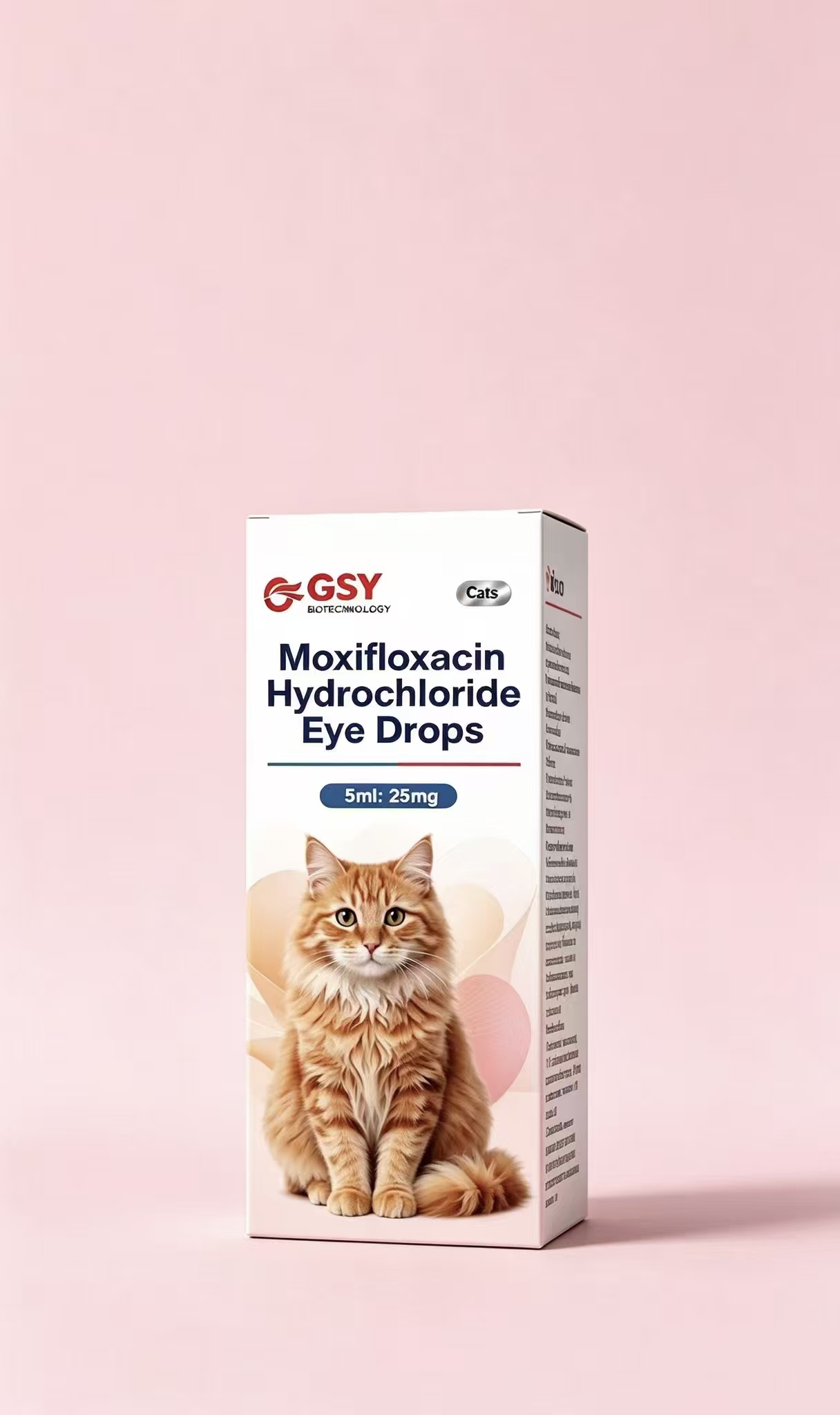
Product Information
Main Ingredient: Moxifloxacin Hydrochloride
Description: This product is a pale yellow-green clear liquid.
Pharmacological Action:
Moxifloxacin is an 8-methoxyfluoroquinolone antibacterial agent with broad-spectrum and bactericidal activity. In vitro tests show that moxifloxacin has antibacterial activity against Gram-positive bacteria, Gram-negative bacteria, anaerobic bacteria, acid-fast bacteria, mycoplasma, chlamydia and legionella.
Moxifloxacin inhibits DNA gyrase (topoisomerase II) and topoisomerase IV, suppressing DNA topology, DNA replication, repair and transcription. Moxifloxacin exhibits concentration-dependent bactericidal activity, and its minimum bactericidal concentration is basically consistent with the minimum inhibitory concentration.
Cross-resistance exists between moxifloxacin and other quinolones, while there is no cross-resistance with macrolides, aminoglycosides and tetracycline antibacterials.
Indications:
For the treatment of bacterial conjunctivitis in cats caused by susceptible bacteria such as Staphylococcus and Streptococcus. It also has a certain therapeutic effect on keratitis secondary to bacterial conjunctivitis.
Dosage and Administration:
For ophthalmic use in cats: 1 drop each time, 3 times a day, for 7 consecutive days.
Adverse Reactions: In clinical trials, adverse reaction incidence is classified as follows:
Very common (incidence ≥1/10), Common (1/100 ≤ incidence <1/10), Uncommon (1/1000 ≤ incidence <1/100), Rare (1/10000 ≤ incidence <1/1000), Very rare (incidence <1/10000).
Within each frequency category, adverse reactions are listed in descending order of severity.
System Organ Class | Adverse Reactions |
Blood and Lymphatic System Disorders | Rare: decreased haemoglobin |
Eye Disorders | Common: eye pain, eye irritationUncommon: punctate keratitis, dry eye, conjunctival haemorrhage, ocular hyperaemia, ocular pruritus, eyelid oedema, ocular discomfortRare: corneal epithelial defect, corneal disorder, conjunctivitis, blepharitis, eye swelling, conjunctival oedema, vision decreased, eyelid erythema |
Respiratory, Thoracic and Mediastinal Disorders | Rare: nasal discomfort, throat pain |
Gastrointestinal Disorders | Rare: vomiting |
Hepatobiliary Disorders | Rare: alanine aminotransferase increased, glutamyl transferase increased |
Other adverse reactions as below: The incidence cannot be estimated from available data. Within each system organ class, adverse reactions are listed in descending order of severity.
System Organ Class | Adverse Reactions |
Immune System Disorders | Hypersensitivity |
Eye Disorders | Ulcerative keratitis, keratitis, lacrimation increased, photophobia, ocular discharge |
Respiratory, Thoracic and Mediastinal Disorders | Dyspnoea |
Gastrointestinal Disorders | Nausea |
Skin and Subcutaneous Tissue Disorders | Erythema, pruritus, rash, urticaria |
Precautions:
1. Discontinue use if hypersensitivity reaction to moxifloxacin occurs in cats. Severe acute hypersensitivity reactions may require immediate emergency treatment.
2. Like other antibacterial agents, prolonged use may lead to overgrowth of non-susceptible microorganisms including fungi. If superinfection occurs, consider switching medication.
3. Administration of different ophthalmic medicinal products should be separated by at least 5 minutes.
Withdrawal Period: Not required.
Specification: 5ml: 25mg (calculated as moxifloxacin)
Storage: Protect from light, store at temperature not exceeding 25℃.
Shelf Life: 24 months; 28 days after opening.