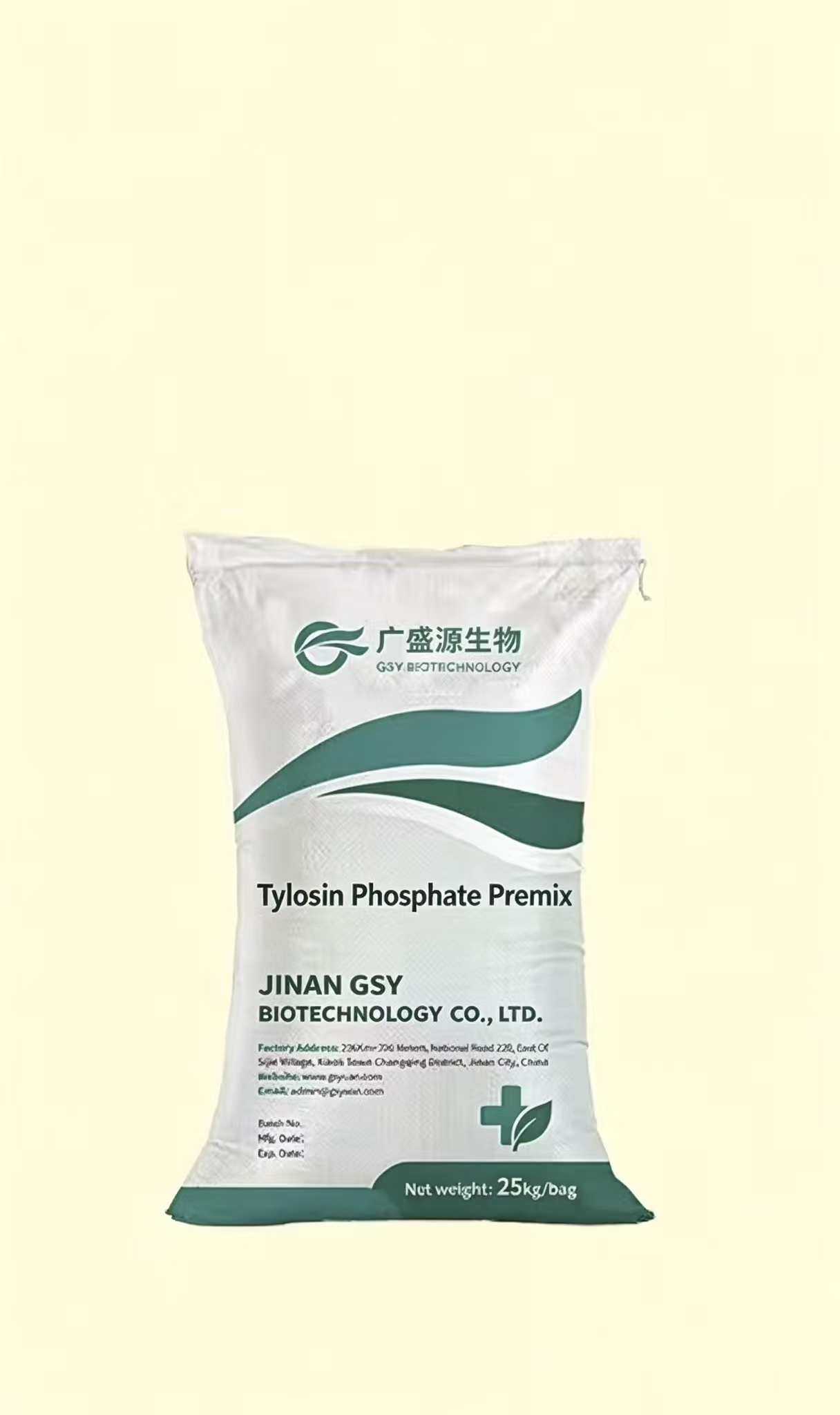
Product Information
Main Ingredients: Tylvalosin Tartrate.
Description: This product is a yellowish-brown powder.
Pharmacological Actions:
Macrolide antibiotic. The antibacterial spectrum of tylvalosin is similar to that of erythromycin. It has a weaker effect on bacteria and a stronger effect on mycoplasma, making it one of the most potent drugs against mycoplasma among macrolides. Sensitive bacteria can develop resistance to this product, and there is partial cross-resistance between this product and erythromycin in Staphylococcus aureus. Tylvalosin binds to the 50S subunit of the ribosome of pathogenic microorganisms, inhibits the translocation reaction catalyzed by translocase, hinders the elongation of the peptide chain of sensitive microorganisms, affects the synthesis of bacterial proteins, and thus exhibits bacteriostatic and bactericidal effects. Tylvalosin tartrate is poorly absorbed by the intestine. After absorption, it is widely distributed in the body like erythromycin. The concentration of tylvalosin in milk is about 20% of that in plasma. Due to enterohepatic circulation, the blood concentration in chickens 6 hours after a single oral administration of 100mg/kg b.w. is usually higher than that at 1 hour. Tylvalosin is excreted in urine and bile in its original form. The excretion rate in pigs is faster than in poultry.
Indications: Mainly used for the treatment of diseases caused by mycoplasma infection in pigs and chickens, and also used for the treatment of necrotic enteritis caused by Clostridium perfringens in chickens.
Usage and Dosage: Calculated as tylvalosin. Mixed with feed: For every 1000kg of feed, 10g~100g for pigs, 4g~50g for chickens.
Adverse Reactions:
It can cause dose-dependent gastrointestinal disorders.
When added to pig feed, it may cause edema of the rectal mucosa, mild anal pruritus, erythema, and diarrhea in pigs.
Precautions:
Do not use in lactating animals.
Do not use in chickens laying eggs for human consumption during the laying period.
Since it has the same target site as other macrolides and lincosamides, it is not suitable for simultaneous use.
Do not mix with feed containing more than 2% bentonite.
It shows antagonism when used in combination with β-lactams.
It can cause contact dermatitis. Avoid direct contact with skin. Wash contaminated skin with clean water.
Withdrawal Period: Pigs, Chickens: 5 days.
Specifications: 100g: Tylvalosin 10g (10 million units).
Storage: 15℃~25℃, protected from light, tightly closed, store in a dry place.
Validity Period: 24 months.